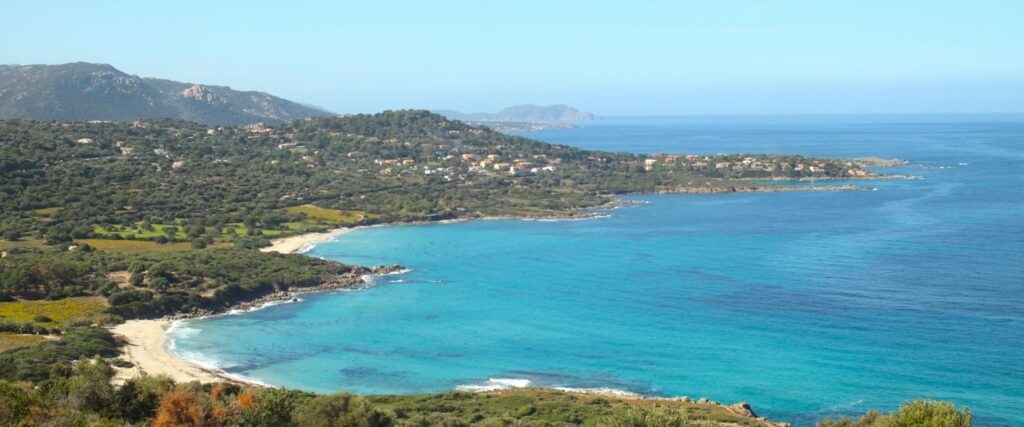
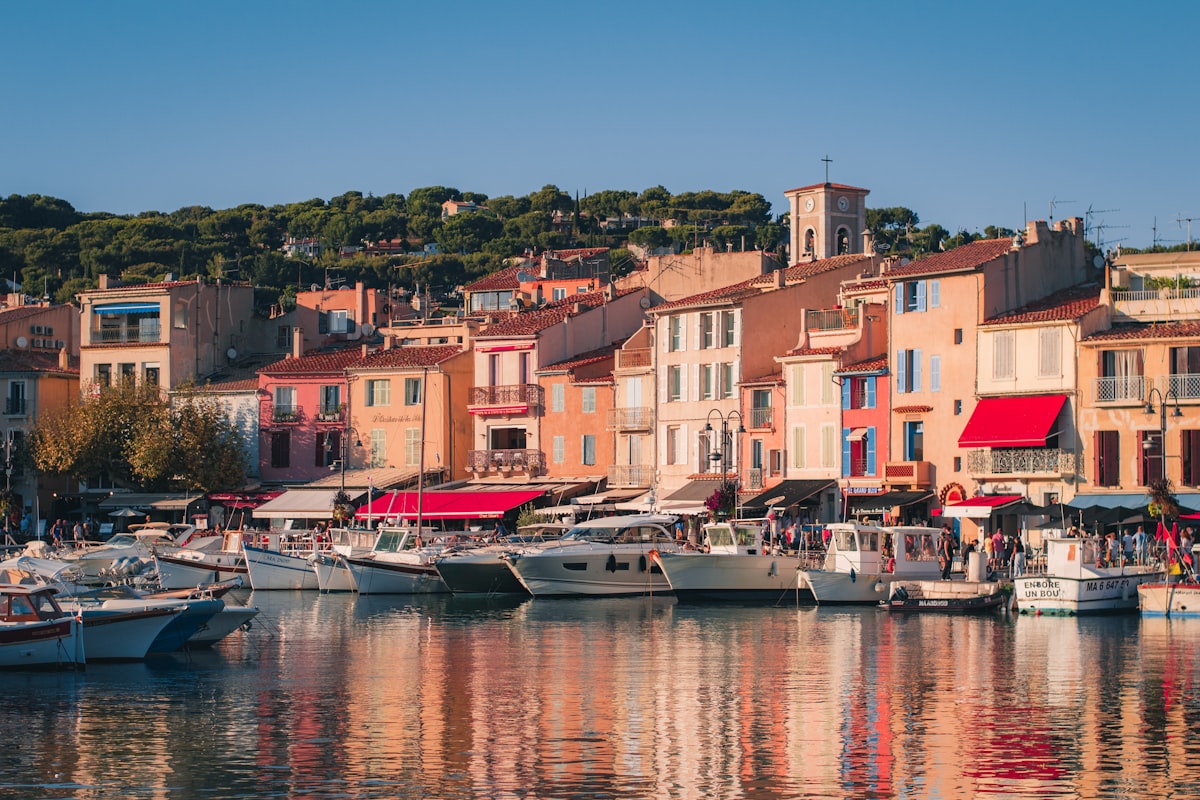
Twenty minutes from Marseille, Cassis is what the Côte d’Azur looked like before the crowds arrived — a small fishing port, limestone cliffs dropping into turquoise water, and the most concentrated beauty per square kilometre on the French coast.
Why Cassis
Cassis is not a resort. It is a small town that happens to sit between the Calanques National Park and the Massif de la Sainte-Baume. Its population of less than 7,000 swells dramatically in summer, but the infrastructure of a genuine community — the market, the wine cooperatives, the morning fishermen — persists underneath the tourist layer.
The Marseillais have always treated Cassis as their personal beach. Families arrive early, claim their spot at Port-Miou calanque, and stay all day. This local attachment gives Cassis an authenticity that many more celebrated destinations on the Côte d’Azur have lost.
The Calanques
The Calanques of Cassis are the three most accessible inlets of the National Park: Port-Miou (reachable on foot in twenty minutes from the port), Port-Pin (forty-five minutes), and En-Vau (two hours, or accessible by kayak). Each is more spectacular than the last.
En-Vau is the one worth the walk: vertical white limestone walls, water so clear you can see the bottom at eight metres, and — outside of July and August — a silence that feels almost sacred. The climb back is steep and exposed in the afternoon sun; bring water and start early.
Cassis Wine
Cassis AOC is one of the smallest wine appellations in France — roughly 200 hectares, producing almost entirely white wine from Marsanne, Clairette and Ugni Blanc grapes. The wine is light, mineral, and slightly saline — it tastes, literally, of the place. The Domaine du Bagnol and Clos Sainte-Magdeleine are the appellations’ reference producers.
In Cassis, drinking the local white wine with sea urchins or grilled fish on the port is not a cliché. It is the only logical response to the situation.
Practical Notes
Access by car in summer is heavily regulated: the D559 from Marseille closes to private vehicles on weekends and public holidays from mid-June to mid-September. A free shuttle runs from the Cassis motorway exit every fifteen minutes. This is, without question, the correct way to arrive — and the view from the shuttle over the final descent into the village is unforgettable.
Best season: May–June or September–October. The calanques are at their most beautiful in the shoulder seasons, the sea is warm from July through October, and the restaurants are not overwhelmed.
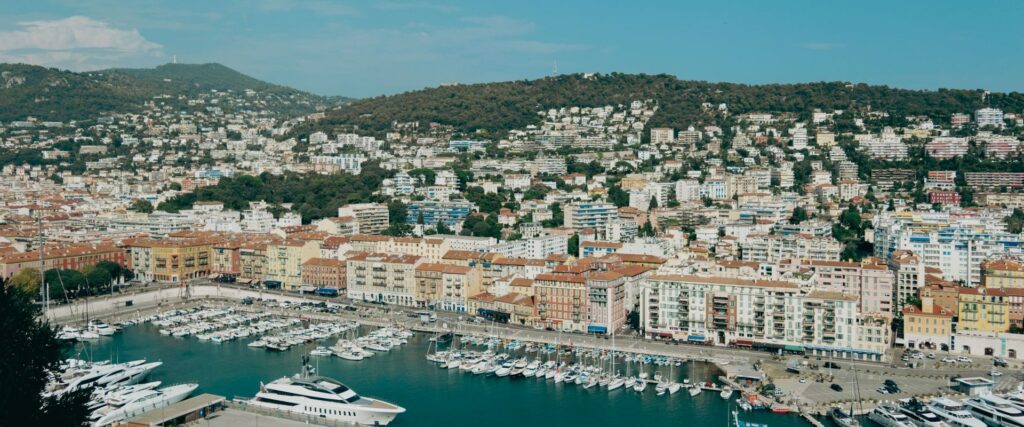
The town itself rewards a slow morning. The harbour front — a crescent of restaurants, cafés and fishing boats — functions as Cassis’s social spine. The market runs Tuesday through Sunday mornings in the small square behind the port, selling the vegetables from the inland valleys and fish that arrived before dawn. It closes by noon, which is deliberate.
The restaurants here operate by a different logic than those in nearby Marseille or Antibes. Most are small, family-run establishments that have occupied the same waterfront tables for decades. L’Oustau de la Mer (reservation essential in summer) serves sea urchin roe and langoustines simply — the kitchen understands that the wine and the view already provide enough context. Le Girelier is less formal but equally serious about its fish. Both close between lunch and dinner service; both close one day a week. This rhythm is not an affectation. It is how a fishing village manages to remain a fishing village.
The other Cassis — the one that exists between May and late June, and again in September — is considerably more pleasant. The water temperature hovers around 18–20°C in May (a wetsuit is sensible), rising to 22–24°C by June and staying warm through October. The restaurants have space. The calanques can be reached without queuing. The Marseillais still arrive, but they do not arrive in the quantities that transform the town into an open-air parking lot.
A practical detail: parking in the town itself is nearly impossible in summer. The shuttle system exists precisely because Cassis has, wisely, accepted that it cannot accommodate the volume of vehicles that want access. Once you are in the town, everything is within walking distance. The waterfront is perhaps 400 metres long. Most visitors spend their time either in the calanques or along this stretch of quay, on one of the small beaches at Port-Miou or Port-Pin, or at the restaurants and cafés facing the water.
The road back to Marseille — the D559, climbing away from the coast — is worth taking slowly if you have time. The views back toward the Calanques from the higher switchbacks are the ones most visitors miss because they are either arriving harried or departing in convoy with the weekend traffic. Late afternoon, driving away from Cassis toward Aubagne, the light catches the limestone differently. The sea turns from turquoise to dark blue. The experience of Cassis crystallises into something more durable than a photograph.
This is, perhaps, the point. Cassis does not demand to be discovered. It permits itself to be visited, briefly, by those who understand that good places often remain good precisely because they have not been optimised for arrival.