Brittany has over 2,800 kilometres of coastline. The tourist maps cover perhaps 80 of them. Here are seven beaches that the guidebooks haven’t found yet — or that they mention in such passing terms that they remain effectively secret.
1. Plage de Treompan, Finistère
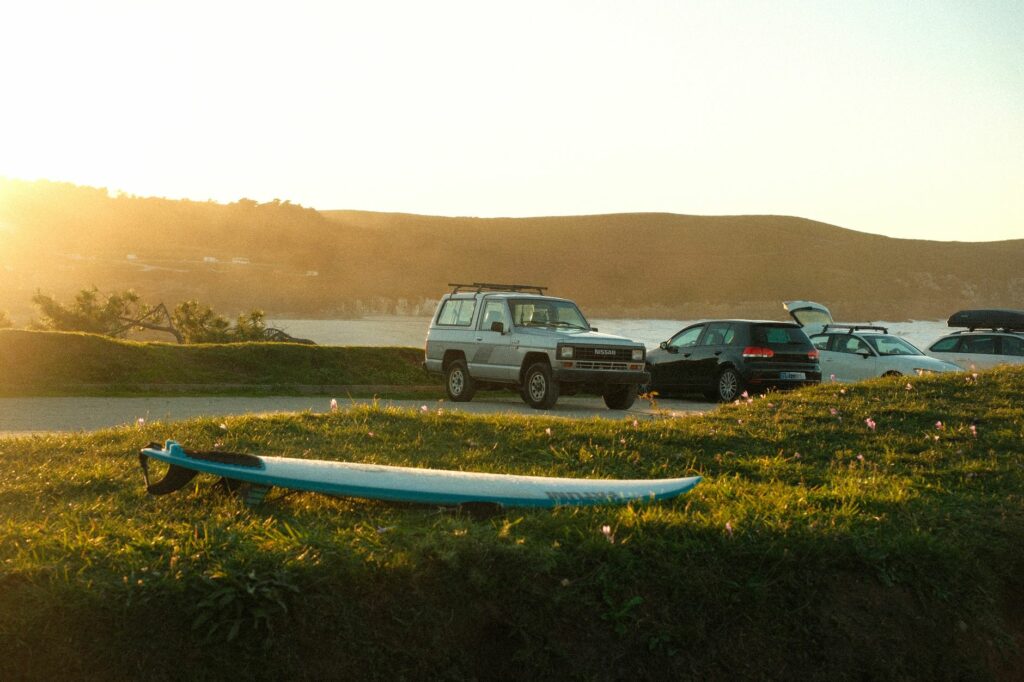
At the very tip of the Crozon Peninsula, Treompan opens onto open sea. A small car park, a short path through moorland, and suddenly: a wild arc of sand backed by dunes, facing due west into the Atlantic. Surfers come here for the clean swells that arrive unbroken from the open ocean. Families don’t, which is what makes it what it is.
2. Plage de Goulien, Cap Sizun
Cap Sizun ends at the Pointe du Raz — the most famous and most visited headland in Brittany. Five kilometres back along the D784, a small sign points to Goulien beach. The descent is on foot (fifteen minutes) through a valley of ferns. The beach below is a perfect natural amphitheatre: enclosed, sheltered from the wind, facing south. It is almost always empty.
3. Anse de Perros, Côte de Granit Rose
The Pink Granite Coast is famous for Ploumanac’h and Perros-Guirec. The crowds gather there. Three kilometres east, the Anse de Perros is a smaller cove where the same extraordinary pink granite boulders frame a quiet beach accessible only to those who know where to turn off the coastal path.
4. Plage de Kersiguénou, Crozon Peninsula
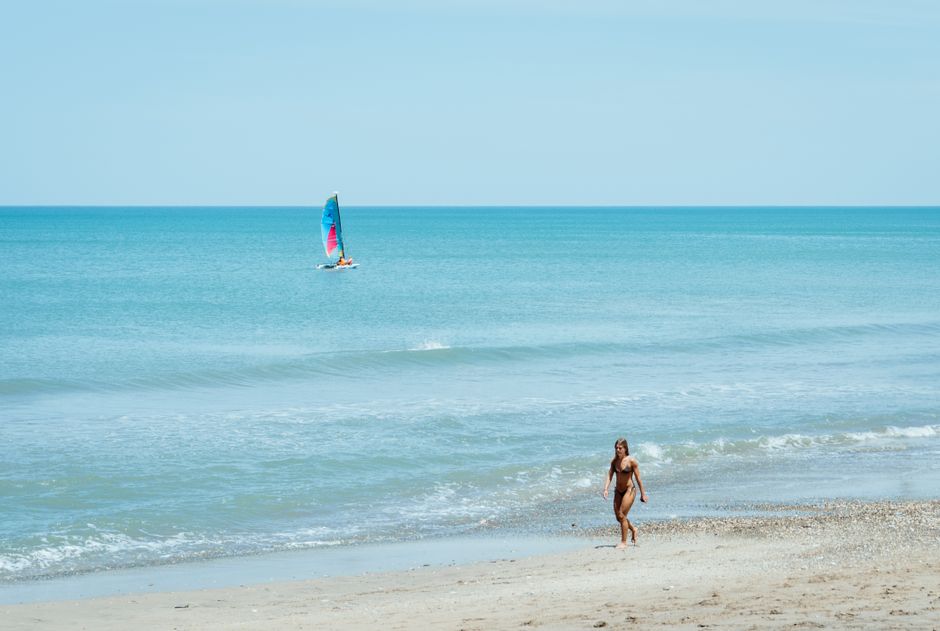
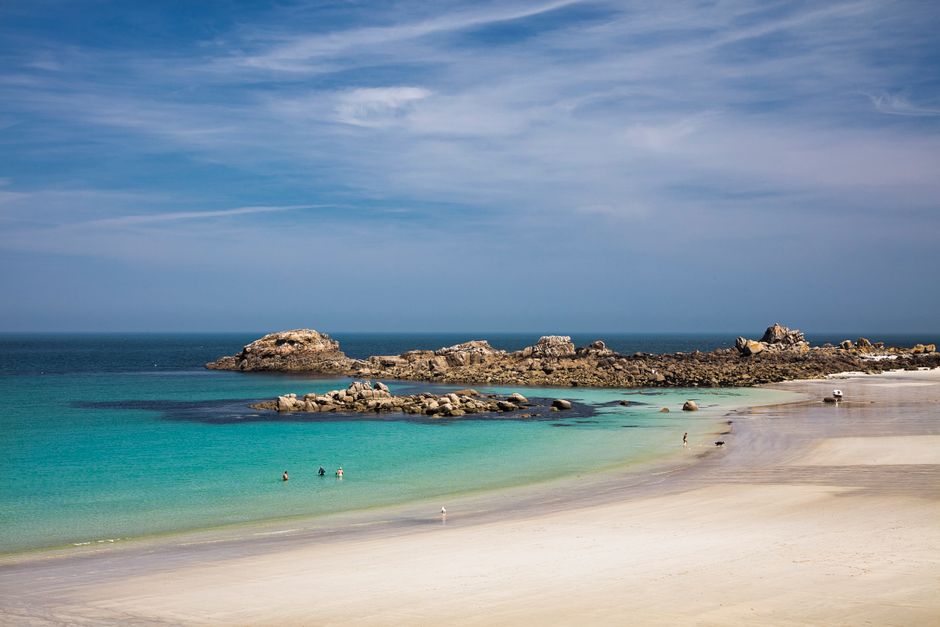
The Crozon Peninsula contains more good beaches per kilometre than anywhere else in Brittany. Kersiguénou, on the western shore, is the least known of them. A narrow track through farmland leads to a cove where the water, in full summer sun, turns a colour that looks Mediterranean but is definitively Atlantic.
5. Plage de Donnant, Belle-Île-en-Mer
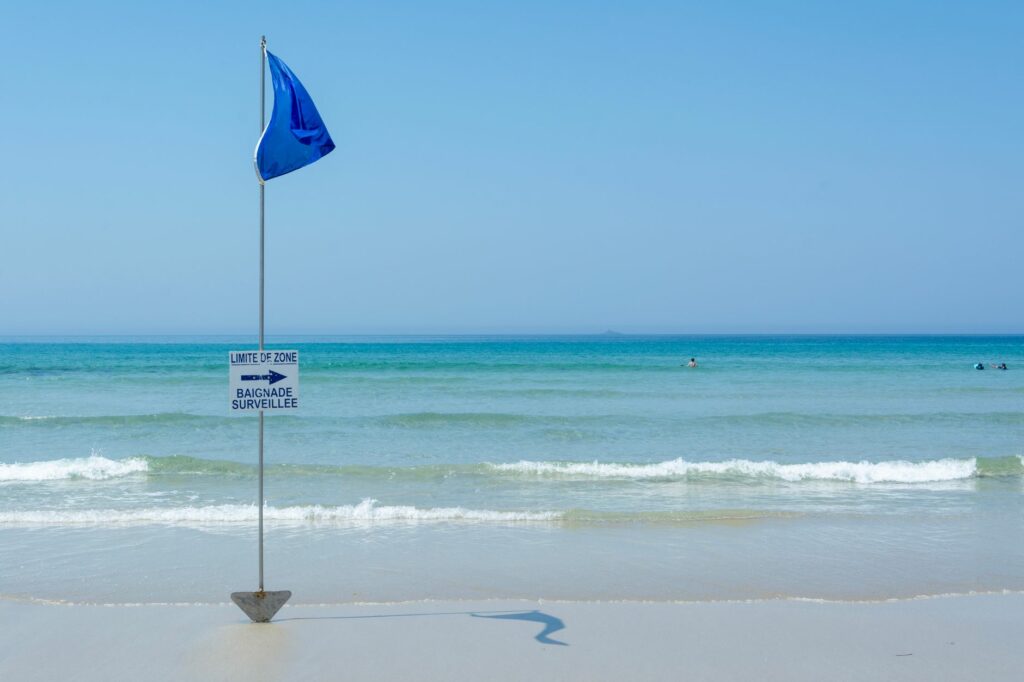
Belle-Île is not exactly undiscovered — but Donnant beach, on the island’s exposed west coast, is a different matter. Facing the open Atlantic, it receives swells that make it unpredictable for swimming but perfect for the particular pleasure of watching big waves in safety from the dunes above. Lifeguards are present in summer; the swimming conditions are assessed daily.
6. Plage de Porh Puns, Groix Island
Groix, the island forty-five minutes by ferry from Lorient, has one of the most unusual beaches in Brittany: Porh Puns, a convex beach (the only one in Europe) where the sand curves outward rather than inward, creating a lens-shaped inlet. The optics are slightly vertiginous. The beach is calm and protected; the water is shallower than on Groix’s Atlantic side.
7. Plage du Sémaphore, Presqu’île de Rhuys
The Rhuys Peninsula closes the Gulf of Morbihan from the south. Its southern shore faces the open Bay of Biscay; its northern shore faces the calm inland sea of the gulf. The Plage du Sémaphore, near the village of Sarzeau, sits at the tip of the peninsula where both environments meet. In the right conditions — a warm August afternoon, the tide at mid-height — both the gulf and the ocean are visible simultaneously from the same point of sand.
sand bar. The phenomenon lasts perhaps two hours, depending on the season and the Atlantic swell. Most visitors to Rhuys never make it to the peninsula’s southern tip; they remain on the gulf side, where the water is calm and the beaches are backed by pine trees. Sémaphore requires intention.
These seven beaches share something beyond their obscurity: they are all reached by small decisions. Not all are accessible by car to the water’s edge. None has a café, a shower block, or a lifeguard station visible from the car park. Several require local knowledge to find at all — the signs are discreet, the car parks unmarked, the paths unmarked. This is not accidental. Brittany’s regional authorities have made a deliberate choice not to develop certain stretches of coast, to leave them as they functioned before the arrival of industrial tourism.
The practicality of visiting them demands a certain rhythm. Summer weekends are the wrong time; the locals who maintain these beaches’ peace will have retreated to them as well, and parking becomes difficult. Spring and autumn are better — May, September, early October — when the water temperature is reasonable and the crowds are elsewhere. Winter is viable if you’re willing to accept grey skies and the particular beauty of Atlantic storms viewed from behind a dune.
The roads to reach them are narrow. The Michelin map will show them, but the satNav might not. Mobile signal is unreliable on the Crozon Peninsula and nonexistent on Groix until you walk back up from the beach. This is not a problem if you remember that the point of a beach is the beach itself, not the documenting of it.
Bringing supplies is necessary. Treompan, Goulien, and Kersiguénou have no shops within walking distance. The nearest café to Anse de Perros is three kilometres away, in the direction you came from. On Groix, the ferries run four times daily; arriving without provisions and leaving hungry is a genuine possibility. Donnant, being on an island with a functioning port town, is easier; Belle-Île has restaurants in Le Palais and Sauzon, though you will need either a car or patience with the island’s bus service.
The best time to visit any of them is dictated by tide tables, not opening hours. The Brittany coast has some of Europe’s most dramatic tidal ranges — at Crozon and on the islands, the difference between high and low tide can exceed five metres. A beach that is vast and sandy at low tide becomes a narrow strip of wet rock at high tide. The regional tourism office publishes tide tables; they are also available at most beach car parks and village mairies.
What brings people back to these places is not the absence of crowds, though that matters. It is the sense that they remain as they were — working beaches where fishermen launch boats, where surfers come because of the waves rather than the Instagram potential, where families build sand castles without an audience. The coastline of Brittany is not infinite. Each of these seven is worth protecting by the simple act of not telling everyone about it.